Squash, Tamales & Dumplings: Single Subject Cookbooks


There are a surprising number of cookbooks covering a single fruit or vegetable and mostly I'm a bit skeptical about how useful they are. Not in this case. This book covers both Summer and Winter squash and has breakfast and brunch dishes, dips & soups, main courses, salads & sides, breads & desserts! I love how creative the recipes are. Speedy Pumpkin Waffles, Osso Buco with Butternut & Cannellini Mash, Savory Zucchini Popovers, Kabocha Deviled Eggs and Butternut Brownies are just a few of the intriguing recipes. There are 26 zucchini recipes alone. Let’s just say you will never complain about having too much zucchini ever again! If you know someone who grows squash this is a great book.

I am crazy about tamales. If they are on the menu at a Mexican restaurant I will almost always order them. Of course there is a world of difference between good ones and lousy ones. Good ones have almost creamy, rich and flavorful masa and delectable fillings. Lousy ones are dry and crumbly, hard and bland. While I already have one book on tamales, I was happy to see this one too. Quite a number of things set this book apart. There are diagrams to show how different wrapping styles, recipes for “nose-to-tail” tamales made from lamb head, beef cheeks, tongue, tripe and more. There are also recipes for salsas and sauces to serve with your tamales, and quite a few vegetarian fillings like artichokes, creamy mushrooms, even broccoli and cheese tamales and bunch of sweet dessert tamales as well. If you want to make tamales at home, this is your book. 

When I was in Honolulu the last time around I arrived on a Sunday and my first stop from the airport to Koko Head Cafe, Lee Anne Wong’s brunch spot in Kaimuki. I had the amazing cornflake french toast but I had to come back for the dumplings because they were already sold out. On my next visit I got the perfectly fried fish dumplings. Wong clearly loves Asian style dumplings and makes both traditional ones as well as her own modern versions. There are steamed, boiled, deep fried and pan fried dumplings to satisfy your dumpling cravings. There are tutorials on how to make doughs and wrappers, how to fold and cook dumplings and more. The pantry section on Asian ingredients is reason enough to buy the book. Recipes I’ve bookmarked include Spicy Chicken Yuzu Gyoza, Sardine Ginger Wonton Soup and Pork and Chive Dumplings. One caveat, although the book cover is somewhat reminiscent of the Dummies books, this book can veer into being a bit "chaffy" from time to time with long ingredient lists and multiple preparations per recipes, that said the instructions are clear and the recipes so creative I still recommend it.

Disclaimer: These books were provided as review copies and this post includes affiliate links

two weeks from today...

...is Thanksgiving.  And then it's Christmas and then it's spring and then our kids are grown and we're old and we die.  Kidding!  Here are some of my favorite dishes.  What are yours?  I'm in charge of vegetable sides, and I welcome your warm ideas...


A quick snack

Untitled

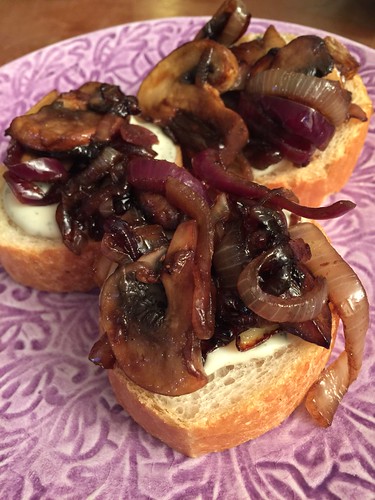
Here's what we had for dinner a few weeks ago. Slices of baguette spread with a softened blue cheese and then topped with onions and mushrooms that had been fried with a splash of balsamic vinegar and plenty of black pepper.

Red Cabbage, Fennel & Cranberries Recipe


Red cabbage frequently ends up in my CSA box this time of year Of course it features prominently in slaws and soups, and makes a good bed for nestling roasts or sausages, but what else? Lately I'm trying sautés. Red cabbage has a really earthy flavor that can go sweet or sour and cooks up easily in a sauté pan, if shredded. 

Red cabbage is healthy, a member of the brassica family, it's cholesterol lowering and perhaps surprisingly the health benefits are greater in cooked cabbage than in raw. If you've ever wondered what makes red cabbage red, it's anthocyanins, a type of polyphenol which is a pigment and is also responsible for the red in cranberries. The amount of Vitamin C is 6 times greater in red cabbage than green cabbage. It's extremely high in Vitamin K too. 

This recipe came about because I had about a half of a head of cabbage, a bit of fennel and some cranberries I wanted to use. The bright and bitter flavors of the dish with just an edge of sweetness complement something rich like pork, sausages, goose or duck. I like the cabbage to still have a bit of crunch, but if you want it softer, just cook it longer with the lid on. 

Note: The amount of sugar you need in this recipe depends on the sweetness of the vegetables and how sweet the wine is. You might start with a tablespoon and add more only if you need it. If you'd rather not add sugar at all, I'd recommend using dried cranberries which are already sweetened. 

Red Cabbage, Fennel & Cranberries 
Serves 4

Ingredients

1 Tablespoon vegetable or rice bran oil 
1 cup sliced onion (half moons)
1 cup sliced fennel bulb 
4 cups thinly sliced red cabbage
1 cup cranberries
Pinch salt
2 Tablespoons packed brown sugar
1/2 cup vegetable or chicken broth
1/2 cup red wine 

Instructions 

Heat a large skillet and add the oil. When the oil is hot, add the onion and fennel and sauté for 5 minutes or until translucent but not brown. Add the cabbage and sauté for another 3 minutes or until glossy and beginning to reduce in volume. Add the cranberries, salt, brown sugar, broth and wine. Cover and simmer gently for 5 minutes. Remove the lid and cook until the liquid evaporates. Taste for seasoning and serve. 

Enjoy!

Interview with Margarita Carrillo Arronte, author of Mexico: The Cookbook


What we don’t know about Mexican cuisine could fill the pages of a massive book. And now it does. Margarita Carrillo Arronte, a chef, teacher, restaurateur, TV host and the Mexican Ministry of Agriculture's chef is the first Mexican author to have written a comprehensive book on Mexican food in English. Last week I had the great pleasure of meeting her and learning more about Mexican cuisine and her book, Mexico: The Cookbook.

How long did the book take to write and why did you write it in English? 
It took two years, but a lifetime, starting with being raised in Mexico, eating and cooking there. I always wanted to write this book in English, because I saw a need. There are other books on Mexican food in English, but not written by someone from Mexico. 

The book is on the cuisines of Mexico, not the cuisine. Because there are eight regions and the weather, the culture and the people are different. The cuisine is completely different from one region to another. The Northern part of Mexico doesn’t have the range of ingredients you find in the South but all they have some great recipes. Some regions have indigenous people with very strong food traditions. We have influences from many different countries--France, Spain, the Philippines. We had trade relations with Asia going back hundreds of years ago. 

What are the major misunderstandings about Mexican food? 
1. That it’s unhealthy, greasy and cheap
2. That it’s too spicy 
3. That it’s about quantity not quality
4. That Mexican food is served with rice and beans. That’s Tex Mex, not Mexican. 
5. That red rice! It’s often cooked badly. The rice is over toasted and it doesn’t taste good. 

When people come to Mexico, what should they eat? 
A variety of food, such as the real burritos of Baja which are nothing like what you find in California, and different kinds of beans. Eat at the little places with local flavors. Eat what the locals eat, not just what’s served to tourists. 

Your book has 700 recipes, what are the recipes readers should try first? 
1. Start with the easy recipes, ceviches and salsas. 
2. Learn the technique of dry toasting, we toast everything—chiles, tomatillos, onions, garlic, spices. 
3. Try some of the simpler soups 
4. We have lots of egg dishes, try one like Huevos Rabos de Mestiza, a Yucatecan dish of eggs with chiles, tomatoes and tomatillos. 
5. Make a dessert such as arroz con leche. 

Gracias Margarita! 

Pumpkin Scones


Did you know that Trader Joe's is currently selling THIRTY FIVE different pumpkin products?  Did you know that women across the country, wearing cozy sweaters, boots and scarves, are buying ALL of them?  They might even be secretly listening to Christmas music in their cars on the way home!  I am not, of course, talking about myself... and even if I were talking about myself, I would claim it was all in the name of "blog research" - holiday music included.  I'm a normal person.

So I may or may not have a lot of pumpkin puree around the house, and I may or may not be in search of recipes.  Similar to this recipe, for these Pumpkin Scones.  They are moist, they are full of all those spices that accompany pumpkin so well and they are topped with sweet, sugary icing (I ran out of powdered sugar, therefore only made the basic glaze).  Also, they are perfect with coffee for breakfast.  Joy to the World!  (I'm talking about myself I'm listening to Christmas music already help) 

Tosca Cake Extra Delux

Untitled

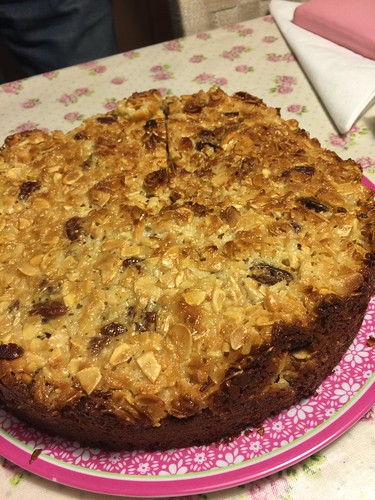
A Tosca cake is basically a pound cake with a nut-caramel topping. My dad's favorite, and I make sure to bake him one every now and then. I like to vary the toppings, and this one had sliced almonds, chopped almonds, pecans and coconut which was a particularly successful combination! I hope you'll give it a try!

Tosca Cake Extra Delux

2 eggs
125 g sugar
100 g flour
1 tsp baking powder
100 g butter
2 tbsp cream

Topping:
50 g butter
100 g sugar
2 tbsp cream
2 tbsp flour
50 g flaked almonds
50 g chopped almonds
50 g pecans, chopped
50 g coconut flakes

Preheat the oven to 175°C. Butter and flour a springform pan, about 24 cm in diameter.

Beat eggs and sugar until very fluffy. Melt the butter. Stir in flour and baking powder with the eggs, and then fold in butter and cream. Pour into the prepared pan and bake for 25 minutes.

Meanwile, prepare the topping. Just mix all ingredients in saucepan and bring to a boil. Spread it on top of the cake, and bake for another 15 minutes. Let it cool more or less completely before taking it out of the pan.

Los Angeles, take 3


HELLO!  I have been away for awhile and you hate me.  You've totally written me off, forgotten about me, and I am nothing more than the robot lady on your phone who can't answer a single question correctly.  But wait!  I'm back!  I love you!  I have exciting things to share with you on the horizon!  For now, though, I will leave you with a few Instagram photos from our trip to Los Angeles.  Of food, of course.  The above photo was taken at The Griddle Cafe on Sunset.  If you ever find yourself in Hollywood, this is a must.  The pancakes and french toast are ridiculous, and the entire restaurant smells like that freshly made batter.  I ordered the Fiesta Scramble, and then also ate the majority of my kid's Chocolate Chip Pancake.  Why do I order my own food again?

The photo below is of the Chocolate Pizza at Craig's on Melrose.  It's not on the dessert menu, but you MUST ask about it if you're ever at this restaurant.  Also order the Honey Truffle Fried Chicken.  I SAID HONEY TRUFFLE FRIED CHICKEN.  But don't worry, plant eaters, they have four featured vegan dishes as well!  Love this place... and it's always a fun spot for a celebrity sighting or two (ahem, Pat Sajak and John Stamos).    


We also went to Katsuya this trip.  Not my favorite sushi restaurant (Sugarfish, Sasabune and Nobu are much better in my opinion), but a fun spot nonetheless.  Even though the geisha in the bathroom scared the S*@T out of my son: 


Be back soon!

Global Kitchen & Mad Delicious: Cooking Light Cookbook Reviews

For years I subscribed to Cooking Light but these days I have a love hate relationship with it. Some months I treasure the magazine and other months hardly anything in it appeals to me. In addition I find their books to be hit or miss. Right now there are two Cooking Light books on the market, one a keeper, the other a loser.

True to its name, Cooking Light Global Kitchen shares recipes from around the world. There are 150 recipes, 120 of which came from the magazine and another 30 that “fill in the gaps.” They all fit within the magazine’s guidelines for nutrition, ease and speed.

The author/editor David Joachim tapped many chefs to help with the recipes and the results are impressive. The recipes may not be the most authentic but they are certainly user friendly. There are recipes from East Asia and India, Southeast Asia and Australia, The Middle East and Africa, Europe and Eurasia, South America, North and Central America. 

Many of the recipes take classics in a new direction like tabbouleh salad with chicken or a salad nicoise with seared tuna. And frankly many seems like improvements on the original such as lobster rolls freshened up with shaved fennel and citrus. I like that there are photographs on every page, for every recipe. I’ve bookmarked Quinoa Pudding, Cape Malay Curry (with warm spices, buttermilk, beef, peppers and apricots)  Quick Lamb Kofta with Harissa Yogurt Sauce, Champagne Browned Butter Chicken and Fennel Cured Halibut Gravlax. 

Bottom line? KEEPER especially if you're looking for healthier international recipes. You could find most of these recipes online or in the magazine, but this it is convenient to have them curated this way.


I was very excited to hear about Cooking Light Mad Delicious:The Science of Making Healthy Food Taste Amazing, but I’m rather disappointed with it.

My issues with the book, I’m going to just give you just a few, start with Culinary School Chicken. It’s a basic roast chicken recipe. But one of the very first instructions says “Rinse your chicken under cold running water. Allow to air dry or pat dry with good quality paper towels. Use the cheap ones and eat paper.” Uh I have a better idea. DON’T EVER RINSE RAW CHICKEN! Sorry for shouting but the author really should have known better. This is just bad advice. Rinsing does nothing but spread bacteria and is widely discouraged.

Next in the Lower East Side Brisket recipe there is a visual tutorial called Step by Step: Creating a crusty exterior. Basically it says season the meat with spices, heat the oil until hot and brown the meat. Really? That seems pretty obvious.

The author uses potentially hard to find ingredients like sorghum syrup, espelette pepper and Turkish red pepper paste, all without suggestions for substitutions. The book also has instructions for making your own sriracha sauce which will keep for a week to 10 days in the fridge. I don’t know about you, but I’m not going to use 2 cups of sriracha in 10 days. 

Sadly I just didn't find the recipes all that compelling. All in all the book was a good idea, but it misses the mark.  

Bottom line? SKIP IT Science geeks will be disappointed and newbies will be overwhelmed.

Disclaimer: These books were provided to me for review purposes. This post contains affiliate links.

Daniel Lindeberg Bageri & Konditori

Untitled

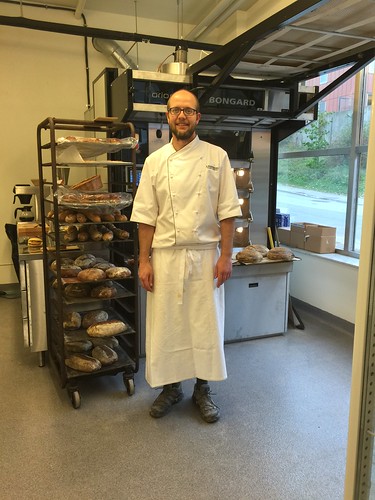
Daniel Lindeberg is perhaps most well known for being half of the super successful restaurant Frantzen/Lindeberg, which gained two Michelin stars in as many years. The restaurant is now just Frantzen, and Lindeberg has moved on to other ventures. His latest is a bakery and pastry shop in Orminge, (Facebook page here.) which is a small suburb in Nacka kommun. Most excellent news for me, as this is just ten minutes from my house. And he is one very talented baker and pastry chef.


Untitled


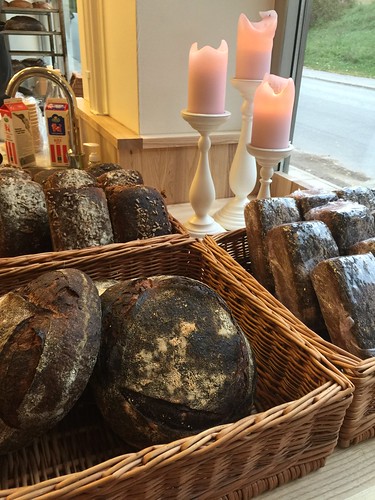
I've visited twice so far and have tried a variety of breads. All very delicious and I can't wait to visit more often.