Father's Day cooking...


First of all, my heart is breaking for those affected by the tragedy in South Carolina.  I can't wrap my head around something so cruel.  It may seem silly, but when unfathomable things like this happen, I think of this Mr. Rogers' quote because it's a simple reminder that there is good in the world.

There's no easy transition from that, so I will just move on.  This morning I was on the Today Show with Carson, making his favorite Father's Day meal, which consists of a grilled bone-in ribeye and a zucchini and summer squash gratin (honestly, HOW do you pronounce that word?).  You can check out the segment in its entirety and view the recipes here.  And if you care to read the article I wrote about Father's Day that Carson references, you can check that out here.

I'll be back at Today next week, so please continue to tune in!


All photos by the lovely Samantha Okazaki.

Mocha Semifreddo – Bad Technique Makes for a Great Frozen Summer Dessert

I got a request for semifreddo recently, and since it is a massively underrated summer dessert, I decided to give it a go. I love the rich taste, and the fact that you get what’s basically an airy, custard-style ice cream, without having to use a machine. However, it all comes at a cost.

The classic procedure is a little bothersome, since you need to make three separate components – a zabaione, a meringue, and whipped cream – so, I decided to simply use the eggs whole, and make a “zabaringue.” I knew I wouldn’t get as much volume, but I didn’t care.

One of my issues with semifreddo is that they’re sometimes too airy, and the flavor gets spread too thin.That wasn’t a problem here, and yet this much simpler version retained a wonderfully light texture despite the shortcut. I decided on a mocha-flavored semifreddo, since coffee is a pretty manly ingredient, and this sure would make a nice Father’s Day dessert. I hope you give this a try soon. Enjoy!

Warning: Answering questions about how to use this technique to make other flavors is tough, since there are many variables. Theoretically, if you replace the coffee and liquor, with other “stuff,” then you should get a similar product. Good luck!


Ingredients for 2 portions:
- For the egg/coffee mixture:
 2 large egg eggs
 2 tbsp sugar
1 1/2 tsp instant coffee
1 tablespoon Kahlua
1 tsp unsweetened cocoa
tiny pinch salt
 - For the whipped cream:
1/4 cup ice cold heavy whipping cream
1 tbsp sugar
-Combine and freeze until firm. If using a loaf pan, line with plastic first!

Cranberry Cornmeal Cookies

Untitled

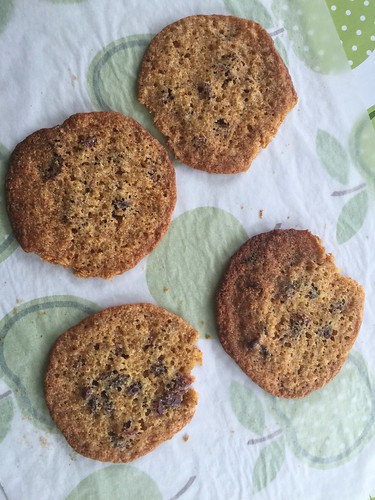
This awesome cookie is from an equally awesome book - The Perfect Egg - from a likewise awesome pair of bloggers: Spoon Fork Bacon. I made them with Dante on a cold and rainy afternoon, and I'm happy to report success. But beware of a few things:

1. Don't overbake. It's easy to do, but will result in crisp rather than chewy cookies, and worse, slightly bitter ones. So watch them.

2. Space. These cookies need their space. A lot of it. So don't overcrowd them. I say six per baking sheet would be perfect. I tried nine, and ended up with big blobby cookies that ran into one another.

3. I've made some adaptions. I changed quantities a little and I'm using metric measurements. I can't find corn meal in Sweden, and as I was baking with a two-year old, I skipped any refrigeration and resting time. (which probably explains the massive spreading.) Need the original recipe? I heartily recommend buying the book.

Got all that? Well, let's go bake.

Cranberry Cornmeal Cookies
about 20-25 cookies, depending on size
adapted from The Perfect Egg by Teri Lyn Fischer and Jenny Clark

180 ml flour (bread flour is recommended, all-purpose is fine)
175 ml polenta (we don't have corn meal in Sweden.)
1/2 tsp baking powder
1/2 tsp baking soda
1/4 tsp salt
110 g butter, at room temperature
120 ml sugar
120 ml honey
2 eggs
1 tsp vanilla  extract
150 ml dried cranberries

In a bowl, combine flour, polenta, baking powder, baking soda and salt.

In another bowl, cream butter, sugar and honey until pale and fluffy. Add the eggs and vanilla, and mix well. Add the dry ingredients, and finally the cranberries.

At this stage, you could (and probably should) chill the batter. Or go ahead and bake, which is what I did. Drop about 1 tbsp of batter per cookie (a little more), very well spaced, on lined baking sheets. Bake at 175°C for about ten minutes - start checking at eight! They should get a little brown around the edges but you don't want them to brown too much.

Let them cool before removing from the sheets, or they're very prone to breaking.

These freeze well!


Frozen Peanut Butter Banana


Carson came home from work the other day and was raving about this easy recipe: a banana, sliced in half, smothered in peanut butter and frozen.  What a great thing to keep in your freezer for a sweet, savory, healthy snack!  I, of course, would dip it in dark chocolate, maybe roll it in coconut... but I don't know when to stop.  You should make this, thanks Joy Bauer!    


Speaking of Carson, I wrote a little something about him for Father's Day here.  If you enjoy, please share, and vote, or better yet... join the site and write your OWN!    

Nectarine Salsa – Stone Cold Delicious

I’ve always loved the marvelous contrast between a hot, smoky piece of meat, and a cold, fruity salsa; and this version featuring nectarines did not disappoint. In fact, the only thing that pairs better with this fresh fruit salsa is a basket of crispy tortilla chips.

This salsa will work with any stone fruit, but nectarines are my favorite. They’re usually sweet, even when still a bit firm, which I prefer texturally over a perfectly ripe price of fruit. Having said that, if you do have a few peaches to use up this summer, this is something to keep in mind.

As I said in my closing arguments at the end of the video, if you think fruit salsa is just too weird, then you need to be reminded that tomato, a fruit, is the most popular salsa ingredient of all time. I rest my case…again. Hope you give this a try soon. Enjoy!


Ingredients for about 2 cups Nectarine Salsa:
*Note: everything here is “to taste,” so adjust accordingly.
1 cup finely diced nectarine
1/3 cup finely diced onions
1/2 cup finely diced red bell pepper
2 tbsp finely diced jalapeno pepper
1 tbsp chopped cilantro
2 tsp olive oil
1 tbsp fresh lime juice
1/2 tsp salt, plus more to taste
pinch cayenne
pinch freshly ground black pepper

Interview with Hugh Acheson

Chef Hugh Acheson | Photo by Andrew Thomas Lee
Chef Hugh Acheson released his third book, The Broad Fork: Recipes for the Wide World of Vegetables and Fruits, last month, which I reviewed in a round up of Southern cookbooks recently. It's an exciting cookbook with truly creative combination of ingredients and a focus on using vegetables you might just find at a farmers market or in a CSA box. We got a chance to meet and talk while he was in San Francisco just last week. 

Where have you been eating in the Bay Area? Any standouts?
Octavia, La Taqueria, Deli Board. For coffee--Sightglass, Blue Bottle and Coffee Cultures. Up in Healdsburg--Healdsburg Shed, Scopa, Dry Creek Kitchen. Hana for sushi in Rohnert Park was phenomenal. I'm looking forward to checking out Souvla today. 

What kinds of restaurants appeal to you the most? 
I’m always looking for current and contemporary and "ethnic" food. When I travel it’s usually long days, so I don't want a three hour, 12 course meal, I find them exhausting, I don’t eat much, I like to try a lot of things.  I like a place with good wine, with good burgundy.

Your culinary influences are so diverse—French, Southern, Japanese, Indian, Mediterranean—what is your process for creating a dish? 
I’m trying to pick up on nuances of flavor. It’s important that recipes are grounded in culinary logic. I try to make sure I’m putting together a puzzle that works, and in the case of  The Broad Fork, respecting the actual vegetable. I don’t like overwrought food—I prefer food to be light on the palate. I just want people to cook more. 

We went through a period 20 years ago of using ingredients and coming up with dishes like wasabi mashed potatoes. It showed a shallow knowledge of cultures. Now we’re cooking a lot more from scratch. Our understanding is much more relevant as ingredients are more accessable. Umami type flavors are more prevalent than ever before. Most of the recipes in the book are not complicated, I’m not having you stuff a chicken and age it in a tree for three months.  

For years the press has talked about “vegetables moving to the center of the plate.” It’s starting to happen in some San Francisco non-vegetarian restaurants. Will it happen with home cooking, in restaurants? At any of your restaurants?
We are moving towards it, protein prices have become exceptionally difficult and it’s hard to have quality and not charge $45 a plate. I don’t eat 6 ounces of protein anymore, 3-4 ounces is plenty. 

What role does pickling and preserving play in your cooking?
The Southern larder is all about pickling and preserving, as we get to the bottom of it and nerd out on it you can see the world’s pantry revolves around those things too. We’re nerds, we are learning whole new genres and saving the season's bounty. 

What are some good recipes for home cooks who are just getting started with pickling and preserving?
Americans get scared by fermentation but they eat and drink fermented food all the time. The fears are real, but there are smart common sense rules. I’d recommend making vinegar, but not just adding tarragon to white vinegar and hoping for the best. Or make sauerkraut. Or carrots with ginger or pickled peppers. Kimchi. Making these things is like science projects for my kids. 

You are one of the only chefs I know to advocate the use of a slow cooker and pressure cooker. How do you recommend using them?
You can make chicken stock in both! I think the slow cooker is just an evenly tempered cooker. You can slow cook lamb shanks over 8 hours.

Pressure cookers may not be the chefs favorite things, but they are used everyday in Asia and Mexico—anywhere with legume rich cuisine. Both are excellent at tenderizing. You can make corned beef in 55 minutes, of course that’s after brining for a week. The best beans ever are cooked in the pressure cooker. Once you get used ot it you can control it. They are pretty versatile machines. 

What’s next for you? More restaurants, cookbooks, TV? 
Not another book! My full time job is running 4 restaurants. We're opening a coffee shop, we’re very into coffee at the restaurant.

I do a lot of public speaking. I have a charitable organization. We are creating a family consumer science program for grades 6-8 to give kids life skills--so they can make a vinaigrette, roast a chicken, poach an egg. So they don’t run into the dilemma of how to feed a family of 4 on 8 dollars. We have a school district that is going to put it into place. 

I’m also working on a healthy fast food concept. It’s called Broad Fork and we’re trying to form the right alliances. Think large plates, based on the Southern meat and 3 formula.  You will make your own plate with protein and lots of salad elements. A cafetaria model kind of like Chipotle.

Is healthy fast food the wave of the future? 
In San Francisco you're going to have Locol—I think Patterson and Choi are on to something. Beefsteak in DC. There’s a big market for changes and disruptive markets. When we say fast food and fast casual, it’s how America eats.

Chipotle Bowls at home!


Who doesn't love Chipotle?!  (No, that's not a rhetorical question, I really need to know if someone in this world exists who doesn't love Chipotle.)  It's a magical place with fresh ingredients, quick service, salty chips and BEER!  There's even beer.  The kid portions rock, the guacamole is insane, and you can customize your order pretty much any way you like it.  Unfortunately, or maybe fortunately, we don't live very close to one, so I decided to make our own bowls at home!  

I followed this recipe using black beans instead of pinto (that I warmed on the stove with some chopped cilantro and green onions) and leftover grilled corn off-the-cob (with lime juice and zest).  Oh, and I may have gone to the restaurant to get their guacamole and chips to-go.  In case you're wondering, the Chipotle cheese is a blend of monterey jack and white cheddar.  Brilliant.  

What's your Chipotle go-to order?

*Even though I wrote their name 1700 times, this post was NOT sponsored by Chipotle, but hey, IF YOU'RE OUT THERE READING THIS, YOU MAGICAL PLACE YOU, FEEL FREE TO SEND ME COUPONS.  That was classy.   


Beef, Bean, and Beer Chili – What a Great Way to Lose a Beer

As the legend goes, someone was making a batch of chili one day, while drinking too much beer, and due to a series of unfortunate events, a bottle was dropped into the pot. 

By the time it was fished out, the contents had escaped, and a new, delicious version of chili was born. As a former line cook, I'd say that sounds about right.

This recipe reminds me of the decision we’re faced with whenever we make beef stew. Should we deglaze with wine, or just our broth? Both make great, but differently flavored stews, so it really just depends on your mood, and also whether you're willing to sacrifice your adult beverage.

As I mention in the video, hot chili is a very underrated summer menu item. Bring a big ol’ thermos of this to a picnic, or other warm weather cookout, and it makes a great side to those grilled burgers and dogs. Just have some insulated cups around, and maybe some hot sauce, and you’re in business. I hope you give this beef, bean, and beer chili a try soon. Enjoy!


Ingredients for 6 portions:
1 tablespoon vegetable oil
1 diced onion
2 pounds ground beef
2 tsp salt, plus more to taste
1 teaspoon ground black pepper
3 tbsp ancho chile powder, or to taste (I like ancho, but any high-quality ground chili pepper will work)
1 tablespoon ground cumin
1/8 teaspoon ground cinnamon
2 tsp paprika
1 teaspoon unsweetened cocoa powder
1/4 teaspoon dried oregano
1/4 teaspoon ground cayenne pepper
3 cloves garlic, minced
1 (12-oz) bottle of beer
1 cup tomato puree or crushed tomatoes
2 cups water, or as needed
2/3 cup diced green pepper (I used poblano, but a combo of jalapeno and green bell works great too)
2 (12 ounce) cans pinto beans, drained and rinsed well

Wine of Alsace: Wine on Friday

Orschwihr--Copyright ZVARDON-ConseilVinsAlsace
Many years ago I explored the little villages and towns on the famous “route du vin" in the Alsace. I was charmed by the rolling landscape of vineyards, dotted with medieval towns with cobblestone streets, castles and half-timbered houses with colorful flowering window boxes. And I was excited to see magnificent white storks nesting on rooftops.

The food in the Alsace is outstanding, two typical dishes are choucroute with sausages and sauerkraut and potatoes and flammekueche, a wood fired tart with creamy onion topping and lardons, that is like a French version of pizza. I would eat one right now if I could! 
Some postcards from the Alsace
The region has a German influence and shares many of the same wine varietals, but there are clear differences. While German wines tend to be lower in alcohol and sweeter, the French wines of this region are often floral, fruity, dry and richer with just a bit more alcohol, little or no oak and well priced. Needless to say, the wines of the Alsace are well worth getting to know. They have a clean and concentrated characteristic along with terrific acidity that makes them the perfect pairing for the food of the region and far beyond. Perhaps 20% of the wineries are organic or biodynamic, although as is typical in France, this isn’t something you’re likely to find on a label. Many of the best known wineries have been around for hundreds of years. 
Recently I had a number of Alsatian wines at a dinner with Moroccan inspired food. The range of wines showed how they could cool warm spicy chiles, yet stand up to the richness of a creamy eggplant dip. The wines of the Alsace are labeled by the varietal and only a small percentage are ever blended. The Alsace is dominated by white wines, here are the major varietals to know: 

Gewurtzraminer—aromatic with fruit, flowers and spice. It’s richer and less sweet than the German ones, but the fruitiness can make you think it’s sweeter than it is. 

Pinot Gris—the Alsace is just north of Burgundy, and Pinot Gris is in some ways like the white wines of that region. It’s bold and concentrated and often has smoky aromas with spice and fruit such as ginger or peach as well as earthy notes. Whatever you do, don’t compare it to Pinot Grigio, it’s a much weightier wine.

Riesling—dry and fruity, this varietal in the Alsace has fantastic minerality and a bright citrus quality. They are much bigger wines than the ones in Germany and  bit higher in alcohol too. Older ones become rich with age.

Muscat—unlike Muscat from other regions, this one is dry, and is known for being the perfect complement to asparagus. It’s full bodied, floral and citrussy.  

Pinot Blanc—I have to admit, I’m generally not a big fan of Pinot Blanc. It’s creamy and subtle but doesn’t have much “star power.” That said, I had a blend of 65% Pinot Auxerrois, 20% Pinot Blanc, 15% Pinot Gris and Pinot Noir from Meyer-Fonné that was outstanding. 

A few other wines:

Cremant —the Alsace is right next to Champagne and Cremant is the Alsatian bubbly wine made in the same manner. There are lovely versions made from either Pinot Blanc or Pinot Noir rather than Chardonnay and they represent 25% of wine sales from the region. They are light, refreshing, clean and make a terriific apperitif. They are also very affordable, I tried two that retail at just $20 a bottle. 

Grand Cru— a relatively new designation, Grand Cru wines come from one of 51exceptional terroirs and are limited to Riesling, Muscat, Pinot Gris and Gewurtztraminer. They tend to be more elegant and complex and not surprisingly, much higher in price.

To learn more visit Wines of Alsace

Disclaimer: While I was guest at a dinner featuring the wines of the Alsace, I was not compensated monetarily for this or any other post on Cooking with Amy. 

Breaking News! (Actually, a Minor Programming Note)

As many of you know, we've been posting with the same frequency for many years; alternating between three video weeks and two video weeks. One week it's Monday-Wednesday-Friday, and the next it's Tuesday-Thursday. Well, starting this week, whenever we have a two video week, we'll post on Tuesday and Friday instead.

This not only spreads out production a little better, but word on the street is that you get more views on a Friday than a Thursday. I'm not sure why I haven't thought of this before, but better late than never. Don't think of it as having to wait an extra day this week to see a new video, think of it as seeing next week's first video a day early. Thanks, and as always, enjoy!

.